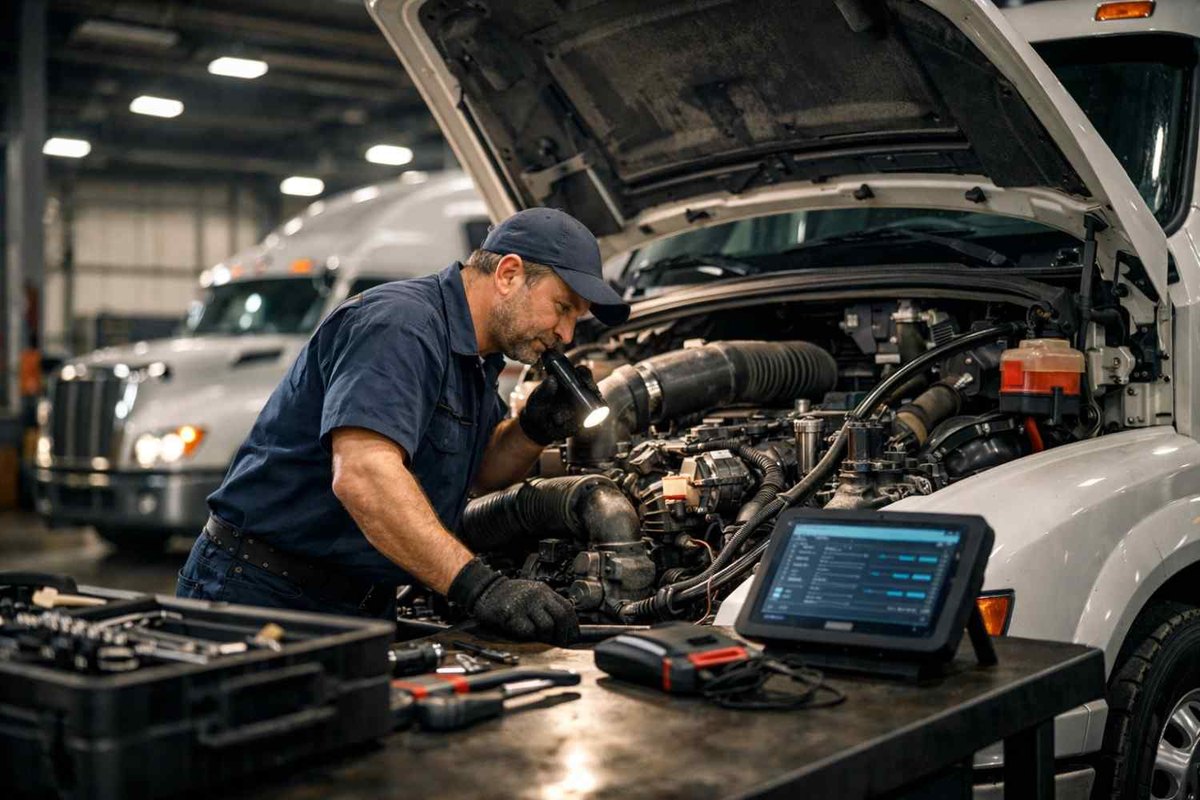

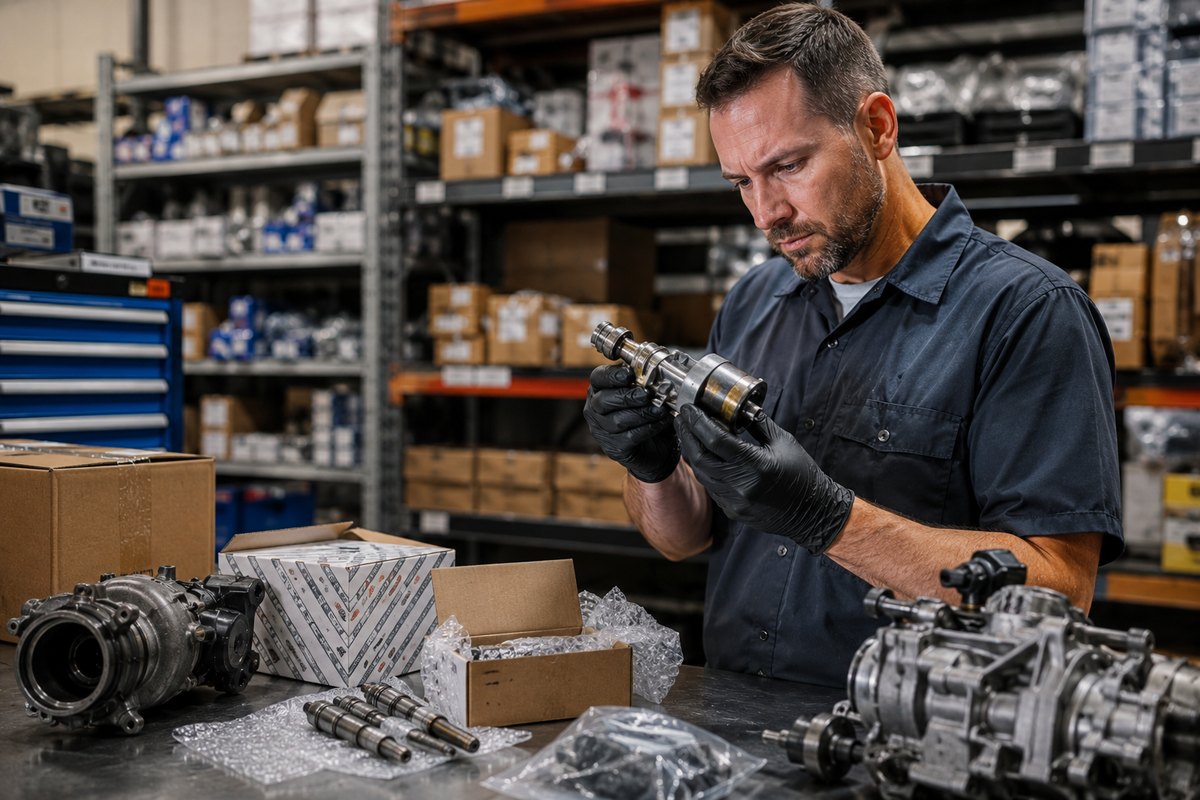
Most guidance on counterfeit truck parts focuses on how to spot a fake after it’s already on the shelf — checking a NOx sensor’s font spacing, comparing a label’s logo spacing, looking for a missing warranty sticker. That’s useful, but it’s also the last line of defense in a problem that starts much earlier: at the purchasing decision. A shop that never buys from an unverified vendor in the first place doesn’t need to get good at spotting fakes visually, because the fakes never make it through the door. Counterfeit parts aren’t primarily a diagnostic problem. They’re a vendor vetting problem, and most shops don’t have a vetting process at all — they have a habit of buying from whoever’s cheapest or fastest that week.
Key Takeaways
- Visual inspection catches only the crudest counterfeits — modern counterfeiting technology routinely passes a technician’s naked-eye check, which means detection can’t be the primary control.
- Gray market parts are genuine components sold outside authorized channels, and they’re harder to catch than outright counterfeits because they don’t trigger any of the usual red flags.
- Below-market pricing, missing certificates of authenticity, and an inability to trace a part’s chain of custody are the three warning signs that matter most before a purchase, not after.
- A distributor that sells both authorized and unauthorized inventory should be treated as a higher-risk source overall, even for the parts it sells through its legitimate channel.
- Vetting a vendor once and never revisiting it misses the risk that a previously reliable supplier’s inventory sourcing can change without any visible warning to the shop buying from them.
In This Article:
Why Detection Alone Isn’t a Real Defense
Counterfeiting technology has advanced to the point that visual inspection alone is no longer a reliable control for many part categories. A technician trained to check for font inconsistencies or a missing warranty sticker will still catch the crudest fakes, but sophisticated counterfeit operations increasingly replicate packaging, labeling, and even performance characteristics closely enough to pass casual inspection and sometimes initial functional testing. Relying on a technician’s eye at the point of installation means the shop only ever catches the problems the counterfeiters were sloppy enough to leave visible — everything else gets installed, and the failure shows up later as a comeback, a warranty dispute, or worse.
This is exactly why shifting the control point upstream, to the purchasing decision, matters more than any inspection checklist applied after a part arrives. A part that never should have been purchased from an unverified source doesn’t need to be caught by a sharp-eyed technician, because it was never going to be sitting on the shelf in the first place.
The financial exposure compounds beyond the cost of the part itself. A counterfeit or gray market component that fails prematurely creates a comeback, consumes shop labor twice, and — if it’s a safety-critical system — creates liability exposure that dwarfs whatever was saved on the original purchase. Industry estimates place counterfeit-related losses across the broader automotive sector in the tens of billions of dollars annually, and heavy-duty parts carry the same underlying risk profile with higher stakes attached, given the weight and safety consequences involved when a commercial vehicle component fails in service.
Counterfeit Parts vs. Gray Market Parts: A Distinction That Matters
Counterfeit parts are fakes — manufactured to imitate a genuine component, often without meeting the underlying engineering or material specifications the original part was built to. Gray market parts are a different and, in some ways, harder problem: they are genuine parts, manufactured by the actual OEM or a legitimate licensee, but sold outside authorized distribution channels — sometimes because they were decommissioned for failing quality control, sometimes because they were approved for sale in one market but diverted into another. Because gray market parts are real, they don’t trigger the labeling or performance red flags that catch counterfeits, and most anti-counterfeiting detection methods won’t flag them at all.
The practical result is that a shop can do everything right on counterfeit detection — checking labels, verifying part numbers, testing performance — and still end up with a gray market part that carries no manufacturer warranty and may have been pulled from inventory specifically because it failed a quality check somewhere else in the world. The only reliable defense against both categories is the same: knowing exactly where a part came from and whether that source is actually authorized to sell it.
A used or salvaged part sold honestly as used is neither counterfeit nor gray market — it’s a legitimate category with its own well-understood tradeoffs, and shops that knowingly buy salvage inventory are making an informed decision rather than being deceived. The problem is specifically when a part is represented as new, OEM, or authorized when it isn’t, which is exactly the misrepresentation that both counterfeiting and gray market diversion depend on to move product through channels that wouldn’t otherwise accept it.
The Three Warning Signs That Matter Most Before You Buy
Three signals, checked consistently before a purchase rather than after a failure, catch the large majority of counterfeit and gray market risk. Pricing meaningfully below the market rate for a genuine part is the most common tell — legitimate distributors operate on margins that don’t allow for the kind of discount that makes a suspicious deal attractive in the first place. A missing or unverifiable certificate of authenticity is the second: authorized distributors can produce documentation tracing a part back through the heavy-duty truck parts sourcing chain to the manufacturer, and a vendor unable or unwilling to provide that is signaling something worth taking seriously. The third is an untraceable chain of custody — a part with no clear account of where it’s been between the manufacturer and the shop’s shelf is exactly the kind of part that gray market and counterfeit inventory both tend to be.
None of these three checks require specialized equipment or expertise. They require a purchasing habit: asking for documentation, comparing pricing against a known baseline, and being willing to walk away from a deal that looks too good relative to everything else in the market — which is precisely the deal most likely to be exactly that.
Documentation that relies purely on paperwork also deserves a healthy dose of skepticism, because counterfeit and gray market operations have become sophisticated enough to replicate compliance certificates, lot numbers, and shipping manifests convincingly. A certificate of authenticity is a necessary check, not a sufficient one — it should be paired with an independent verification step, such as confirming directly with the manufacturer or an authorized distributor list that the specific vendor is who they claim to be, rather than trusting a document that arrived from the same source being evaluated. Most major OEMs maintain a published or request-available list of authorized distributors specifically for this purpose, and cross-checking a new vendor against that list takes only a few minutes.
Why a Vendor’s Overall Sourcing Pattern Matters, Not Just This Order
A distributor that sells both authorized, traceable inventory and unauthorized gray market inventory through the same sales channel should be treated as a higher-risk source overall, even for the specific parts it’s selling through its legitimate side. This is a harder judgment to make than checking a single order, because it requires evaluating the vendor’s broader business practices rather than just the transaction in front of you — but it matters, because a distributor willing to mix sourcing streams has already demonstrated the kind of risk tolerance that makes an isolated bad order more likely, not less.
Vendor vetting also isn’t a one-time decision. A supplier that was fully authorized and reliable a year ago can shift its sourcing practices without any visible change in how it presents itself to a shop — a distributor facing supply pressure, margin pressure, or a shortage in a specific part category is exactly the situation that pushes previously reliable sourcing toward the gray market. Periodically re-verifying a vendor’s authorization status, rather than assuming a past relationship guarantees future sourcing integrity, closes a gap that a one-time vetting process leaves wide open.
This pattern shows up across industries facing supply pressure, not just heavy-duty parts. Analysts tracking counterfeit risk in electronics and other component-heavy sectors consistently point to supply shortages as the single strongest predictor of a spike in gray market and counterfeit activity, because scarcity is exactly what creates both the price pressure that makes a suspicious deal attractive and the urgency that discourages a buyer from asking hard questions before accepting it.
Building a Vendor Vetting Habit Into Purchasing
A practical vetting process doesn’t need to slow down routine purchasing for parts from established, verified vendors — it needs to apply real scrutiny at the moments that actually carry risk: a new vendor, an unusually good price on a hard-to-find part, or a category where the fleet has previously had quality issues. Fleets navigating tight heavy-duty parts supply chain conditions are under the most pressure to skip this scrutiny exactly when it matters most, because a shortage creates urgency to accept whatever inventory is available rather than take the extra day to verify a new source. That’s precisely the moment counterfeit and gray market risk is highest, which makes it the worst possible moment to relax the standard.
A short standing policy — require a certificate of authenticity for any new vendor relationship, flag any price more than a set percentage below the known market rate for manual review, and document the source and chain of custody for parts in safety-critical categories — turns vetting into a repeatable habit rather than a judgment call made fresh every time under time pressure.
Assigning clear ownership of this policy matters as much as writing it down. A vetting standard that exists in a document but that any technician or purchaser can override under deadline pressure isn’t really a standard — it’s a suggestion. Naming a specific person responsible for approving new vendor relationships, and requiring their sign-off before a first order goes out to an unverified source, gives the policy actual teeth without meaningfully slowing down the routine purchasing that makes up the bulk of a shop’s parts activity.
When a Trusted Vendor’s Own Supply Chain Gets Compromised
Not every counterfeit or gray market part enters a shop through an obviously sketchy vendor. Some of the most damaging cases involve a legitimate, long-standing distributor whose own upstream supply chain gets compromised without their knowledge — a sub-supplier further up the chain mixes in unauthorized inventory, and the distributor unknowingly passes it along to every customer buying that part number, including shops that did everything right on their own vetting. This is a harder risk to eliminate entirely, but it’s also why the same warning signs — unusual pricing shifts, documentation that suddenly looks different from previous orders, a part that performs differently than the same part number has in the past — matter even with vendors a shop has worked with for years.
A shop that treats every order from an established vendor as automatically safe, with no ongoing attention to whether something has changed, is exposed to exactly this scenario. A shop that pays attention to unexpected shifts — a different packaging style, a price that suddenly drops without explanation, a batch of parts that behaves differently in the field than previous batches of the same part number — has a real chance of catching a compromised upstream supply chain before it causes a widespread problem across the fleet. Reporting these anomalies back to the vendor, rather than quietly working around them, also gives a legitimate distributor the chance to investigate their own upstream sourcing before more compromised inventory reaches other customers.
Quick Reference: Vendor Vetting Checklist Before a New Purchase
A short set of checks separates a vetted purchase from one that’s simply convenient:
- Confirm the vendor is an authorized distributor for the specific brand and part category, not just a general parts supplier
- Request a certificate of authenticity or documentation tracing the part back to the original manufacturer
- Compare the price against the known market rate for a genuine part — treat significant discounts as a reason to slow down, not speed up
- Ask specifically how the part moved from the manufacturer to the vendor’s inventory, and be wary of vague or evasive answers
- Re-verify authorization status periodically for existing vendors, especially after any signal of supply pressure in their category
- Apply extra scrutiny to safety-critical part categories, where the cost of a failure is far higher than the cost of the part itself
- Watch for unexplained changes from established vendors — different packaging, unexpected price drops, or parts performing differently than prior batches of the same number
A shop that runs new vendors and unusually attractive deals through this checklist closes off the majority of the exposure that ends up as a comeback, a warranty dispute, or a safety incident down the line. Printing the checklist and keeping it at the purchasing desk, rather than treating it as a policy everyone is supposed to remember, keeps the standard consistent even when the person placing an order is filling in for someone else or working under an unusual deadline.
The Bottom Line
Counterfeit and gray market parts aren’t primarily a detection problem solved by a sharper eye at the point of installation — they’re a purchasing problem solved by a vendor vetting habit applied before a part ever reaches the shelf. Modern counterfeiting routinely defeats visual inspection, and gray market parts are genuine enough to defeat it by definition, which means the only reliable control sits upstream of both: knowing exactly who a part came from and whether that source was actually authorized to sell it.
This shift in framing matters practically, not just conceptually. A shop investing time in technician training on how to spot a fake sensor is solving a narrower problem than the one it actually faces, because that same shop remains exposed to every other part category where nobody has ever been trained to look, and remains fully exposed to gray market parts that no visual training will ever catch. The purchasing-side fix covers every part category at once, which is exactly why it’s the control worth building first.
None of this requires a compliance department or expensive verification tools to start. It requires treating every new vendor relationship and every unusually good price with the same scrutiny a fleet already applies to safety-critical maintenance decisions — because a counterfeit or gray market part that fails in service carries exactly that kind of risk, whether or not it looked right sitting on the shelf. Shops that build this habit before a shortage forces urgent sourcing decisions are in a far stronger position than those trying to build it for the first time under pressure, once a part is already needed and the clock is already running.