
In This Article:
Why mobile PDR is a smart choice in Houston’s climate and traffic
In Houston, TX, fast-moving storms, hail events, and packed freeways create a constant risk of door dings and minor dents. Mobile dent repair brings paintless dent repair directly to your driveway, office, or parking garage, saving time and avoiding traffic. With on-site repair, professional technicians perform PDR houston without disrupting your day, often offering same day service for small door dings. The approach is cost-effective because there’s no repainting, no fillers, and no sanding—helping preserve vehicle value and the original factory look. During peak hail seasons, mobile service helps accelerate hail damage repair and auto dent repair at scale across Houston Texas.
What PDR is and how it preserves your factory finish
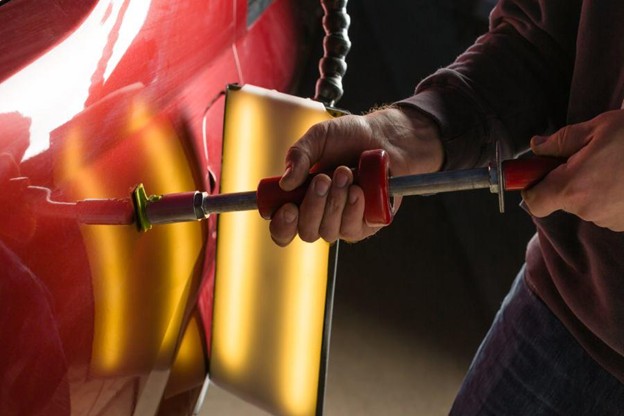
Paintless dent repair (PDR) is a precise, metal-massage technique that restores panels from behind or via glue pulling. Skilled PDR specialists manipulate stretched metal back into shape, avoiding traditional dent repair methods that disturb paint. By keeping the original paint intact, PDR maintains your factory finish and original factory look, which protects resale value. Because paintless dent removal relies on advanced techniques instead of fillers or sanding, it’s an efficient solution for auto dent repair on steel and many aluminum panels. For an overview from a national provider, see the CARSTAR Houston paintless dent repair page.
What damage can (and can’t) be fixed: door dings, creases, and hail explained
Mobile dent repair excels at small to midsize damage where the paint is intact:
- Door dings and parking-lot dents: Ideal for quick door ding repair, including dents along bodylines if accessible.
- Creases: Fixable when metal isn’t sharply torn; PDR can remove complex creases with the right access and lighting.
- Hail damage repair: Auto hail damage—dozens or hundreds of dime- to quarter-sized dents—can be corrected panel by panel with paintless dent removal.
Other scenarios:
- Motorcycle PDR: Many fuel tanks and fenders can be restored depending on access points and paint condition.
- Plastic bumper repair: Minor scuffs or shallow impressions may be improved with heat and glue-pull methods, but deep cracks usually need bodywork.
- Scratch repair: PDR does not remove scratches; it may align the panel so touch-up paint or polishing blends better.
What PDR can’t fix and when to use a collision center
Paintless dent repair cannot correct damage with broken paint, torn metal, severe edge crush, or panels repaired previously with body filler. When impact energy distorts panel gaps or safety components, minor collision repair at collision centers is the right path. Deep scrapes or color damage require refinishing and traditional dent repair techniques. If you also need plastic bumper repair or scratch repair that involves painting, consider a mobile paint specialist such as Colors On Parade Houston. Dealerships and insurance companies often partner with both PDR specialists and refinishing providers to deliver the correct mix of services.
The on-site PDR workflow: assessment, access, specialized tools, and finish quality
Mobile PDR is a disciplined repair process focused on accuracy, efficiency, and high-quality results.
Assessment and access
Technicians begin with a thorough evaluation of each dent’s size, depth, crown, and access points. They determine whether dent removal is feasible without harming the original paint and how to reach the back side of the panel.
Lighting and mapping
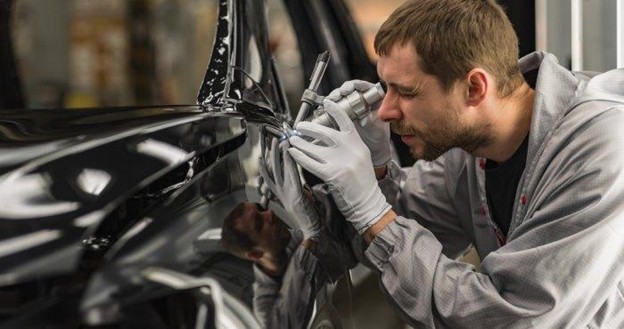
Specialty reflection lighting maps distortions and guides each micro-movement, ensuring the metal is re-leveled precisely for optimal dent repair results.
Insurance-ready photos
Clear before/after photos and panel counts support insurance claims for hail damage repair and auto hail damage documentation, and may help you secure a free estimate before work begins.
Specialized tools and advanced techniques
Technicians choose a blend of rods, whale tails, leverage points, glue tabs, and pullers to perform paintless dent removal efficiently on-site.
Glue pulling and cold glue
When back-side access is limited, glue pulling and cold-glue systems lift metal outward, followed by fine tap-down to balance crowns.
Rods, hooks, and leverage
Precision tools and controlled leverage incrementally restore panel geometry, a hallmark of expert PDR.
Heat management for OEM paint
Proper temperature control protects the original paint, especially on aluminum or colder panels, preserving your factory finish and helping retain vehicle value.
For more on technique fundamentals, see this concise paintless dent removal overview.
Finish quality and quality control
Under high-contrast lighting, professional technicians refine every micro-high and low until reflections flow cleanly. This meticulous finish quality safeguards customer satisfaction and the original factory look while helping to preserve vehicle value.
Pricing, timeframes, and insurance in Texas: deductibles, hail claims, and OEM considerations
Pricing for mobile dent repair in Houston varies by size, depth, metal type, and access:
- Door dings: Often an efficient solution completed in under an hour at a cost-effective rate.
- Creases: More time-consuming; pricing reflects complexity and the delicate metal reset.
- Hail damage repair: Panel counts drive estimates; full-roof/hood hail can require one to three days, depending on volume.
Texas policies typically treat hail as a comprehensive claim; many insurance companies will cover PDR for auto hail damage if it restores panels to OEM standards. Ask about deductibles, rental coverage, and whether the shop bills digitally with photos. OEM considerations matter: keeping original paint with PDR is often the best path to preserve resale value and retain vehicle value.
How to choose a Houston mobile PDR technician
- Proven expertise: Look for PDR specialists with extensive portfolios of dent removal and door ding repair, plus training that emphasizes advanced techniques.
- Reviews and reputation: Check Google for consistent feedback about dent repair quality, punctuality, and customer satisfaction.
- Visual proof: Before/after galleries on Instagram, Facebook, and TikTok demonstrate finish quality and the technician’s repair process.
- Insurance fluency: The right provider understands insurance claims, hail supplements, and can coordinate with insurance companies smoothly.
- Services and guarantees: Confirm mobile service capability, on-site repair options, and written warranties. Ask about no repainting, no fillers, and no sanding pledges to protect original paint.
- Turnaround: For small dents, same day service is common; hail scheduling depends on storm volume.
- Network savvy: Established teams often service dealerships and collaborate with collision centers for minor collision repair or refinishing referrals.
Community feedback is also informative; see this candid Houston thread on paintless dent repair. For a vetted local provider, you can also visit paintless dent repair houston.
Aftercare tips for long-lasting results
- Immediate care: After glue-pull work, avoid harsh solvents for 24 hours; normal washing is fine.
- Protective habits: Park under cover during storm forecasts to minimize future auto hail damage; respect door gaps in tight lots to reduce door dings.
- Maintenance: Regularly wash and decontaminate paint; PDR keeps original paint intact, which responds well to sealants or ceramic coatings for ongoing vehicle appearance restoration.
- Post-repair checks: Inspect panels under good lighting to appreciate finish quality and contact your technician if you notice any areas that need additional touch-up.
Timing matters: Schedule hail damage repair promptly after a storm to secure booking windows and maintain the factory finish without delays.