

In This Article:
Quick Answer
A used Ram 1500 can be a strong truck purchase or an expensive mistake, depending on how carefully you inspect it before buying.
Before price even comes up, get under the truck. Listen to it on a cold start. Drive it hard enough to actually feel the transmission. Test the 4×4. Make sure the paperwork matches what the seller is telling you, because sometimes it does not.
This is not a best-years list or a price guide. The goal is to walk away knowing exactly what you are buying, including the problems.
What Should You Check Under a Used Ram 1500 First?
People buy Ram 1500s for towing, hauling, family use, and sometimes all three. Because of that, the underbody is where the inspection should start, not the paint or the interior.
Get low and look at the frame rails, crossmembers, suspension mounting points, bed supports, and the areas around the brake and fuel lines. Surface rust on an older truck is normal. Thick scaling, flaking metal, patch plates, or fresh undercoating that looks much newer than the rest of the truck deserve a much harder look.
Fresh black spray on a crusty underbody is not proof of restoration. It can just as easily be a cover-up.
Then check for hard-use evidence. A worn hitch receiver, stretched trailer plug, rear end sitting low, gouged bed floor, or bent rails usually means the truck worked for a living. That does not automatically make it a bad buy, but it does mean the drivetrain deserves closer inspection.
What Can a Cold Start Tell You?
Try to arrive before the seller has already warmed the truck up. A cold start is one of the most honest things a vehicle will show you, and experienced sellers know that.
Listen for long cranking, rough idle, ticking that does not settle quickly, smoke, or warning lights that stay on after startup.
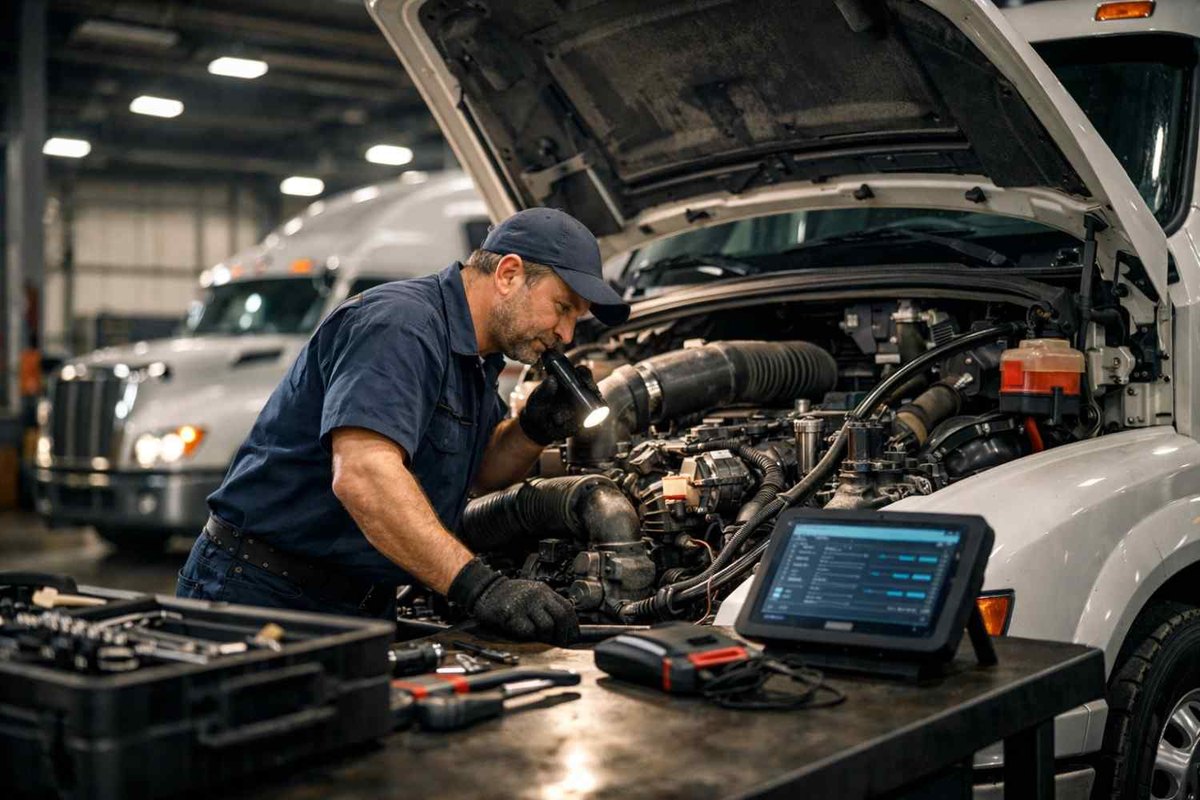
Pop the hood and check for leaks around the valve covers, hose connections, radiator area, and front of the engine. Pull the dipstick and inspect the oil. Check coolant and brake fluid too. Sludge, burnt smell, contamination, or very low fluid levels usually point to neglect.
Do not get distracted by the engine badge alone. The overall condition of the truck matters much more than the name on the side. A Ram 1500 with real service records and a clean cold start is usually a better bet than a nicer trim with no records and questionable maintenance.
If you want a clearer sense of what certain warning signs can cost after purchase, review this repair cost and safety guide before closing the deal.
How Do You Test the Transmission, 4×4, and Suspension?
Actually test the truck. Do not just circle the block once.
The transmission should shift cleanly into drive, reverse, and through the gears under real acceleration. What you do not want is hesitation, shuddering, flare where RPM rises without matching movement, or a hard bang when the transmission grabs a gear. Any of those signs deserve serious caution.
Four-wheel drive should also be tested. Shift into four-high and make sure it engages without grinding, blinking warnings, or long hesitation. If conditions allow, try four-low too. You want a clean and predictable response.
Tires tell a story as well. Uneven wear on the front tires often points to worn steering parts, poor alignment, or past accident damage. A truck that bounces too much, sits unevenly, or clunks over normal bumps may have more than a simple alignment problem.
On higher-trim trucks, test everything. Drive modes, backup camera, parking sensors, seat adjustments, climate control, and any suspension or air-ride settings all need to work. A loaded Ram gets expensive quickly when several premium features have quietly stopped working.
Does the Interior Match the Mileage?
The cabin often tells the truth if you know where to look.
Check the driver seat bolsters, steering wheel leather, pedal rubber, center console edges, and the buttons around the infotainment screen. If the odometer says 70,000 miles but the interior looks like 180,000, ask questions.
Test the windows, locks, backup camera, touchscreen, USB ports, and every climate setting. Smell the carpet too. Mildew or mold usually means water got in somewhere, and it may still be getting in. If trim panels look like they were removed and put back incorrectly, something may have happened that never made it into the listing.
Nice leather seats do not fix a tired drivetrain. Do not let the interior distract you from the mechanical condition.
At What Mileage Does a Used Ram 1500 Get Risky?
There is no clean number.
A Ram 1500 with 160,000 miles that was maintained properly, never overloaded, and still has clean fluids can be a better buy than one with 75,000 miles that was abused, neglected, and already showing rust problems. Mileage is only one piece of the picture.
What matters is whether the wear matches the story. Do the seat, pedals, bed, and hitch look right for the miles shown? If the odometer looks low but the truck looks heavily worn, trust your eyes.
Before buying, run an OBD scan. Stored trouble codes do not always trigger a check engine light, but they still show up on a scan. Also get an independent pre-purchase inspection. A mechanic with no stake in the sale can catch issues you will miss in a driveway inspection.
How Do You Verify the VIN, Title, and Service History?
Before money gets anywhere near the table, verify the truck’s identity.
Match the VIN on the dashboard, driver-door sticker, title, and service records. If one does not match, stop until you understand why.
Service records matter more than most sellers want to admit. Oil changes, brake work, tire rotations, cooling system service, and transmission maintenance all help show how the truck was treated. A seller saying “I took great care of it” is not the same thing as proof.
Pull a vehicle history report and read it carefully. Look for title brands, mileage gaps, ownership changes, accident entries, and signs of commercial or fleet use. If the seller says it was a lightly used personal truck but the report says something very different, that matters.
Sometimes those gaps give you leverage on price. Sometimes they are your sign to leave.
Is the Price Fair for the Truck’s Actual Condition?
Year and mileage do not make a price fair by themselves. Condition does.
A clean Ram 1500 with a solid underbody, consistent service records, smooth cold start, clean shifts, matching tires, and working electronics can justify a stronger price. A truck with warning lights, rough engagement, water intrusion, missing records, or questionable title history should be priced like the risk it really is.
A common mistake is paying top dollar and then spending the first few weeks fixing brakes, tires, suspension parts, or an electrical issue the seller never mentioned. Add up the likely first-month costs before you agree to anything. If the numbers still make sense, move forward. If not, say so.
What Are the Biggest Red Flags on a Used Ram 1500?
- Thick, flaking, or patched frame rust
- Fresh undercoating that looks much newer than the rest of the underbody
- Harsh, delayed, or shuddering transmission behavior
- 4×4 that grinds, hesitates, or fails to engage clearly
- Front-end clunks, wandering steering, or a visibly uneven stance
- Uneven or mismatched tires
- Warning lights that stay on after startup
- Interior wear that does not match the odometer
- No service history, or paperwork with VIN issues
- A seller who rushes you, gets defensive, or claims the truck must be sold today
One red flag alone might be manageable. Four or five stacked together usually mean it is time to walk away.
Before You Pay, Does the Title and Lien Status Check Out?
A truck that drives well is still a bad deal if the paperwork is a mess.
Before any money changes hands, confirm the seller’s name is on the title, the VIN matches the truck in front of you, and any lien is fully released, not supposedly in the process of being released. If the seller gets vague on any of that, slow everything down until it is clear.
Mechanical problems cost money to fix. Paperwork problems can stop you from registering the truck at all, or come back months later after you have already paid.
FAQ
Is a used Ram 1500 a good truck to buy?
It can be a really solid truck if the frame is clean, the drivetrain is honest, and the service history holds up. Buy the best-maintained one you can actually verify, not just the best-looking one on the lot.
What should I inspect first on a used Ram 1500?
Start underneath it. Check the frame, crossmembers, suspension points, brake and fuel line areas, hitch receiver, and bed supports. That is where hard use usually shows up first.
At what mileage does a Ram 1500 get bad?
There is no clean cutoff. Maintenance history and overall condition matter much more than the number on the odometer.
What are the biggest red flags on a used Ram 1500?
Heavy frame rust, suspicious fresh undercoating, rough cold starts, ticking that does not settle, harsh shifts, weak 4×4 engagement, uneven tire wear, warning lights, water intrusion, and paperwork that does not add up.
Should I get a pre-purchase inspection on a Ram 1500?
Yes. It is one of the cheapest ways to avoid buying a truck with expensive hidden problems.
What is the best year of the Ram 1500 to buy used?
Many buyers look at 2013 and newer for the eight-speed transmission and 2019 and newer for the redesign. Even so, an older Ram with strong records and honest condition is usually a better buy than a newer one that was neglected.