
A sudden flat tyre or blowout can leave any driver stranded and stressed. However, if you know the correct steps, you can manage the situation calmly and safely. The first priority is always to stop your vehicle in a safe place, turn on your hazard lights, and assess whether you can replace the tyre yourself or need professional assistance.
This guide explains how to recognize dangerous tyre damage, outlines the safest steps to replace a tyre, and highlights when it is better to call for professional help. By following these practical tips, drivers can protect themselves, avoid further vehicle damage, and get back on the road with confidence.
In This Article:
Recognizing Tyre Emergencies
Being able to quickly identify a tyre problem can prevent a minor issue from turning into a dangerous situation. Drivers should understand the warning signs of tyre failure and the most common causes behind them.
Common Signs of Tyre Failure
Tyre problems often come with clear warning signals. A loud bang followed by rapid air loss usually indicates a blowout. Drivers may also notice the vehicle suddenly pulling to one side or feel strong vibrations through the steering wheel.
Visual inspection can reveal serious problems. Bulges, deep cuts, exposed cords, or a flattened sidewall indicate the tyre is unsafe to drive on. Small objects such as nails or screws can also cause slow punctures that gradually reduce tyre pressure.
Regularly checking tyre pressure and tread depth is essential. Tyres with tread below 3 mm become much more dangerous in wet conditions and increase the risk of aquaplaning. Uneven wear patterns may also signal alignment or suspension problems that should be addressed quickly.
Immediate Safety Precautions
If a tyre fails while driving, remain calm and keep both hands firmly on the steering wheel. Avoid braking suddenly. Instead, gently ease off the accelerator and allow the vehicle to slow down naturally.
Steer carefully toward a safe place such as a hard shoulder, lay-by, or quiet side road. Once stopped, activate hazard lights and, if available, wear a high-visibility vest before stepping outside the vehicle.
Passengers should remain away from traffic and stand behind safety barriers if possible. If it is unsafe to stop immediately, drive slowly until you reach a safer location.
When drivers are unable to change the tyre safely themselves, contacting a professional mobile service can be the safest option. Many motorists today rely on mobile tyre services such as tyres on call, which can reach stranded drivers and replace damaged tyres directly at the roadside.
Understanding the Causes of Tyre Failure
Several factors can lead to tyre emergencies on the road.
Road debris such as nails, glass, or metal fragments often causes punctures. Hitting potholes or curbs can also damage the sidewall and weaken the tyre structure.
Driving with underinflated tyres creates excessive heat and stress, increasing the risk of blowouts. Overloading the vehicle can have a similar effect.
Tyres also deteriorate naturally over time. Rubber hardens as tyres age, making them more likely to crack or fail under pressure. This is why regular tyre inspections are important for every driver.
Steps to Take During Emergency Tyre Replacement
If you decide to replace the tyre yourself, follow safe and structured steps to avoid injury or further vehicle damage.
Finding a Safe Location
Move the vehicle off the road as soon as possible. A straight stretch of road with good visibility is ideal. Avoid soft ground, steep slopes, or blind bends.
Apply the parking brake and shift the vehicle into park or first gear. If possible, turn the wheels toward the verge to reduce the chance of the vehicle rolling.
Exit the vehicle from the side away from traffic and ensure passengers remain at a safe distance.
Using Hazard Lights and Warning Devices
Turn on hazard lights immediately to alert other drivers. If you carry a reflective triangle, place it about 45–60 metres behind your vehicle on standard roads.
High-visibility clothing also improves safety when working near traffic. At night or in poor visibility, additional warning lights or LED beacons can help approaching drivers spot your vehicle earlier.
Assessing the Tyre and Vehicle
Before beginning the tyre replacement process, carefully inspect the damaged tyre. Large cuts, severe bulges, or a bent wheel rim may require professional assistance instead of a temporary spare tyre.
Check that your spare tyre, jack, and lug wrench are available and compatible with your vehicle. Confirm there is no visible damage to the brakes or suspension components before proceeding.
How to Replace a Tyre Safely
Changing a tyre requires a few basic tools and careful attention to safety.
Gather Necessary Tools
Drivers should always keep essential equipment in their vehicle, including:
- A vehicle jack
- Lug wrench
- Spare tyre or space-saver wheel
- Wheel chocks or stones
- Gloves and a flashlight
Park on firm ground and secure the vehicle before beginning.
Remove the Damaged Tyre
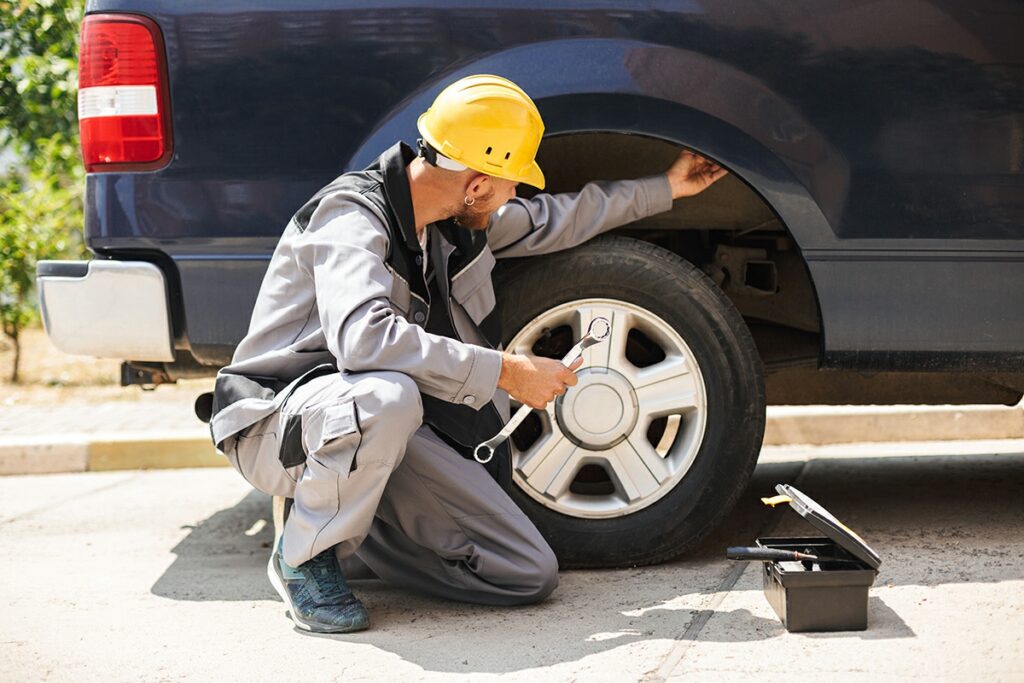
Loosen the wheel nuts slightly while the tyre is still on the ground. Position the jack at the correct lifting point and raise the vehicle until the tyre clears the ground.
Remove the lug nuts completely and carefully slide the damaged tyre off the wheel hub.
Install the Spare Tyre
Align the spare tyre with the wheel studs and push it firmly onto the hub. Hand-tighten the lug nuts before lowering the vehicle slightly.
Once the tyre touches the ground, tighten the nuts using a star pattern to ensure even pressure.
Check Tyre Pressure and Security
Before driving away, confirm that the spare tyre is properly inflated. If it is a temporary space-saver tyre, follow the manufacturer’s recommended pressure level.
Ensure all lug nuts are tight and store the damaged tyre securely in the trunk.
What to Do If You Cannot Replace the Tyre Yourself
In many situations, replacing a tyre at the roadside may not be safe or practical.
Contact Roadside Assistance
Drivers should contact their breakdown provider or a local mobile tyre service. Provide clear details including your location, vehicle type, and the condition of the tyre.
Professional mobile tyre technicians can quickly reach the location and replace the tyre without requiring the vehicle to be towed.
Stay Safe While Waiting
Remain visible by keeping hazard lights on and standing away from traffic. If possible, wait behind a barrier or remain inside the vehicle if the roadside conditions are dangerous.
Keep your phone charged and monitor road conditions while waiting for assistance.
Provide Clear Information
When help arrives, explain the type of tyre damage and whether the vehicle was driven while flat. Photos or descriptions can help technicians determine whether a repair or full replacement is required.
Preventing Future Tyre Emergencies
Many roadside tyre emergencies can be avoided through regular maintenance and inspections.
Routine Tyre Maintenance Tips
Check tyre pressure monthly and before long trips. Use the recommended pressure listed on the vehicle’s door placard rather than the number printed on the tyre.
Rotate tyres regularly to ensure even wear and avoid overloading the vehicle.
Drivers should also keep a basic emergency kit that includes a jack, spare tyre, and tyre inflator.
Inspect Tyres Regularly
Examine tyre tread depth and sidewalls for cuts or bulges. Uneven wear may indicate alignment or suspension problems that should be inspected by a professional mechanic.
Knowing When to Seek Professional Help
Drivers should seek professional help if they notice severe tyre damage, rapid pressure loss, or visible cords in the tyre. These situations usually require immediate replacement.
Mobile tyre services are especially useful when roadside conditions are unsafe or when drivers lack the proper tools to change a tyre.