
Every year, hundreds of thousands of vehicles get moved across the United States on multi-car haulers.
If you’ve ever driven past one on the interstate, a double-decker rig stacked with sedans and SUVs, you’ve already seen open car shipping in action.
But that’s only one side of the equation.
The other option, enclosed auto transport, keeps your vehicle locked inside a fully covered trailer.
It costs more.
It’s harder to book.
And for a lot of people, it’s completely unnecessary.
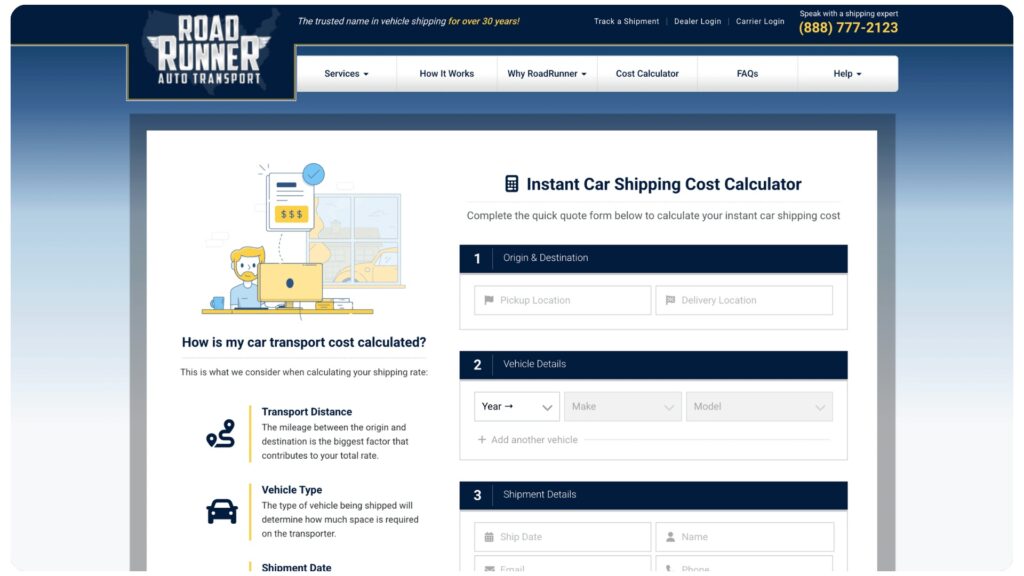
The trick is figuring out which category you fall into before you request a car shipping quote on a site like roadrunnerautotransport.com and commit to a carrier.
In This Article:
What Open Transport Actually Looks Like
Open carriers are the workhorses of the vehicle shipping industry.
These are the same rigs that dealerships use to move brand-new inventory from manufacturing plants to showroom floors across the country.
A standard open hauler carries anywhere from seven to ten vehicles at a time, which is exactly why the per-unit cost stays relatively low.
Your car rides on an exposed rack, which means it’s subject to road debris, weather, and dust during transit.
That sounds worse than it is.
The reality is that millions of vehicles ship this way every year with no meaningful damage.
A few bug splats and a layer of highway grime aren’t the same thing as a scratched quarter panel.
Most drivers wouldn’t think twice about driving the same route themselves, and their car would face identical exposure.
Open transport works well for daily drivers, standard sedans like a Honda Accord or Toyota Camry, family SUVs, trucks, and anything you’d park in a grocery store lot without a second thought.
If your vehicle doesn’t need climate-controlled storage at home, it probably doesn’t need an enclosed trailer on the highway.
When Enclosed Makes the Difference
Enclosed car shipping exists for a reason, though, and that reason usually comes down to replacement value.
A 2024 Porsche 911 Turbo S, a numbers-matching 1969 Chevrolet Camaro Z/28, or a freshly restored classic Mercedes-Benz 300SL Gullwing.
These aren’t grocery-store-parking-lot vehicles.
The financial and emotional stakes are different.
Enclosed trailers typically hold only two to four vehicles per load.
Fewer cars means more individual attention from the driver, less shifting during transit, and zero exposure to the elements.
Some enclosed carriers even offer lift-gate loading, which keeps low-clearance vehicles like a Lamborghini Huracán off steep ramps entirely.
There’s also the insurance angle.
While both open and enclosed carriers carry cargo insurance, enclosed transport companies often provide higher coverage limits as a standard part of the service.
That matters when the vehicle you’re shipping is worth six figures or more.
How Much Does It Cost to Ship a Car?
Price is where most people make their decision, and the difference between open and enclosed isn’t trivial.
Several variables determine what you’ll actually pay, but the biggest drivers are distance, vehicle size, transport type, and time of year.
Here’s a realistic breakdown of what car shipping costs look like on common routes for a standard midsize sedan:
- Short haul (under 500 miles): $400-$700 open / $750-$1,200 enclosed. Per-mile rates are higher on shorter routes because the carrier’s fixed costs (loading, inspecting, and dispatching) get spread across fewer miles.
- Mid-range (500–1,500 miles): $600-$1,100 open / $1,100-$1,900 enclosed. Routes like Atlanta to Chicago or Dallas to Phoenix fall into this bracket, and pricing here tends to be the most competitive because carrier volume is high.
- Cross-country (1,500+ miles): $900-$1,400 open / $1,500-$2,800 enclosed. The classic Los Angeles to New York corridor is the benchmark, though any coast-to-coast move lands in this range.
Oversized vehicles change the math.
Shipping a full-size pickup like a Ford F-250 Super Duty or a large SUV like a Chevrolet Suburban costs 15 to 25 percent more than shipping a compact sedan because the vehicle takes up more deck space on the hauler.
That’s one fewer spot the carrier can sell to another customer.
Seasonality plays a role, too.
Snowbird season (October through February) drives prices up on popular routes like the Northeast-to-Florida corridor because demand spikes while carrier availability tightens.
If you have flexibility on timing, shipping during the spring shoulder months of March and April often yields the best rates.
Getting an Accurate Car Shipping Estimate
The number one mistake people make when budgeting for auto transport is treating the first quote they find as the final price.
A car shipping estimate is exactly that: an estimate.
The actual cost can shift based on carrier availability, fuel prices, and how quickly you need the vehicle picked up.
A few things make estimates more reliable.
First, be specific about your vehicle.
Year, make, model, and whether it runs or not all affect pricing.
A non-running vehicle requires a winch or special equipment for loading, which adds $100 to $200 on most routes.
Second, confirm whether the quote is door-to-door or terminal-to-terminal.
Terminal shipping is cheaper, but it means you’re dropping off and picking up the vehicle at a depot, sometimes inconveniently located outside the city center.
The most useful approach is to collect a car shipping quote from at least three to five different providers before making a decision. Working with a reputable car shipping company that offers transparent pricing and verified carrier networks makes this comparison process significantly easier.
Comparing rates based on your specific route and vehicle details cuts through the guesswork.
Watch for quotes that seem dramatically lower than the rest.
They often signal a broker who’ll post your order at a price no carrier actually wants to accept, leaving your shipment sitting unbooked for weeks.
One detail worth understanding: most quotes in the auto transport industry come from brokers, not carriers directly.
A broker matches your shipment with an available driver on their carrier network.
This isn’t inherently bad. Brokers provide access to thousands of trucks you’d never find on your own.
But it means the final price occasionally adjusts once a carrier claims the load.
A reputable broker will communicate any price change before you’re locked in.
Factors That Should Steer Your Choice
The open-versus-enclosed decision doesn’t have to be complicated.
A few straightforward questions usually sort it out:
- What’s the vehicle worth? If your car’s fair market value is under $50,000, open transport handles the job. Above that threshold, especially once you’re into collector cars, exotics, or limited-production models, enclosed starts to justify the premium.
- What’s the vehicle’s condition? A concours-quality restoration or a showroom-fresh supercar with delivery miles deserves the extra protection. A ten-year-old daily commuter does not.
- Is there sentimental value that goes beyond dollars? An inherited vehicle or a project car you’ve spent years building might warrant enclosed shipping even if the book value doesn’t technically demand it.
- What’s the route and season? Shipping through the Southwest in summer is different from shipping through the Northern Plains in January. Salt trucks, ice, and road grit during winter months can make enclosed transport a smarter call even for vehicles that would normally travel open.
How the Booking Process Differs
Booking open car shipping is straightforward and fast.
Because open carriers dominate the market, with roughly 85 to 90 percent of all auto transport moves happening on open rigs, availability is rarely an issue.
You can typically get a pickup window within five to ten days of placing your order, sometimes sooner on high-traffic routes.
Enclosed transport requires more lead time.
Fewer enclosed carriers operate nationally, and their schedules fill up faster, especially during peak seasons.
Two to three weeks of advance notice is common, and expedited enclosed shipping comes with a surcharge that pushes the cost even higher.
Both options follow a similar logistics chain: a broker or carrier confirms your order, assigns a driver, provides a pickup window, and delivers to either a terminal or your door.
The carrier inspection report, which documents existing dings, scratches, and condition, happens at both pickup and delivery, regardless of transport type.
Review that report carefully before signing off.
What to Watch for After You Get Your Car Shipping Quote
Once you’ve gathered estimates and selected a provider, a few details protect you from surprises.
Confirm the cancellation policy in writing.
Some brokers charge a fee if you cancel within 48 hours of the scheduled pickup, while others offer free cancellation up to the dispatch date.
Ask whether the quoted price includes fuel surcharges or if those get added separately at booking.
Check the carrier’s FMCSA registration and insurance.
Every legitimate auto transport company operating in the United States must be registered with the Federal Motor Carrier Safety Administration.
You can verify this with their MC number or USDOT number on the FMCSA website.
It takes thirty seconds and eliminates a category of risk entirely.
Finally, understand the delivery window.
Car shipping isn’t like ordering a package with next-day tracking precision.
A cross-country shipment typically takes seven to fourteen days from pickup, and weather, traffic, or mechanical issues can shift that by a day or two.
Carriers will usually give you a 24- to 48-hour heads-up before arrival, so plan accordingly rather than booking around a hard deadline.
The Bottom Line on Choosing
Most people shipping a car for a relocation, an online purchase, or a seasonal move will do just fine with open transport.
It’s cost-effective, widely available, and has a track record that spans decades of reliable service across every major route in the continental United States.
Enclosed transport earns its premium when the vehicle genuinely warrants it.
High-value exotics, rare collectibles, and irreplaceable restorations benefit from the added protection, both physical and financial, that a covered trailer provides.
Spending an extra $800 to protect a $150,000 asset is a sensible ratio.
Spending it on a $12,000 sedan is not.
Pick the service level that matches the vehicle, not the one that matches the anxiety.
The car shipping industry has been doing this for a long time, and both options exist because both fill a legitimate need.
Get your quotes, compare the numbers, and book with confidence.