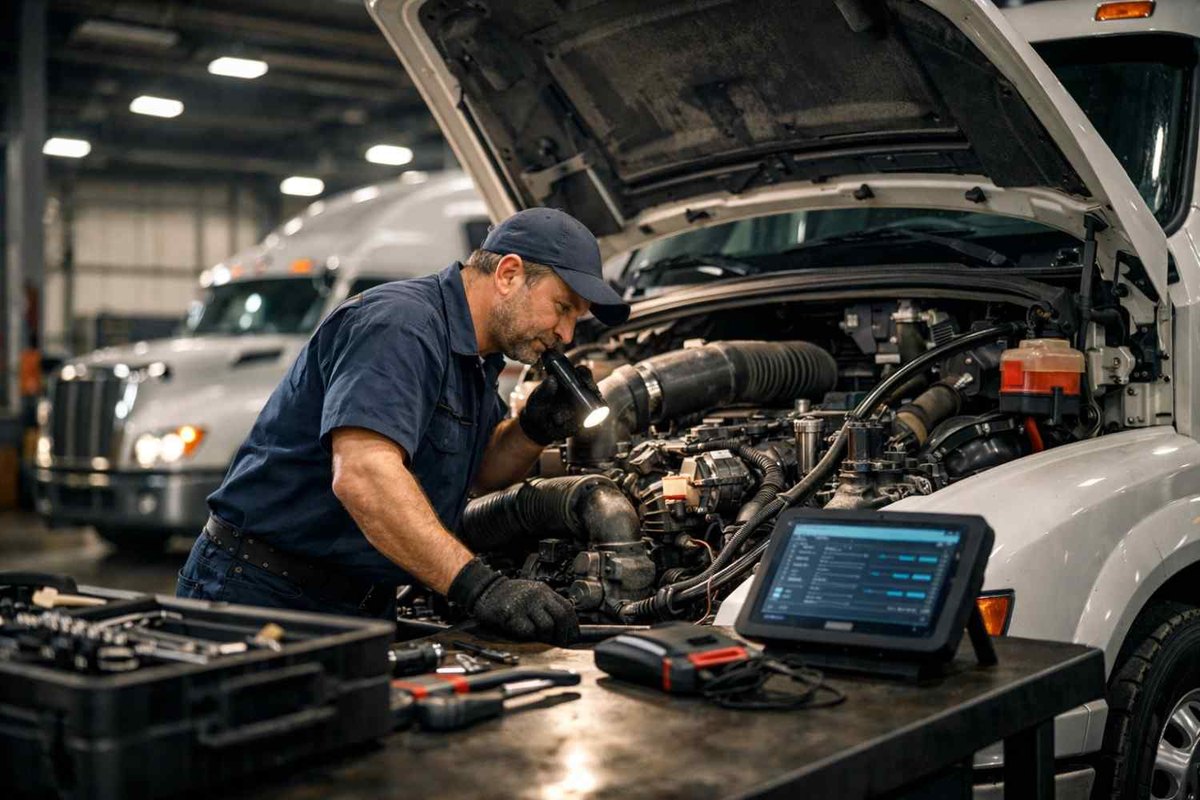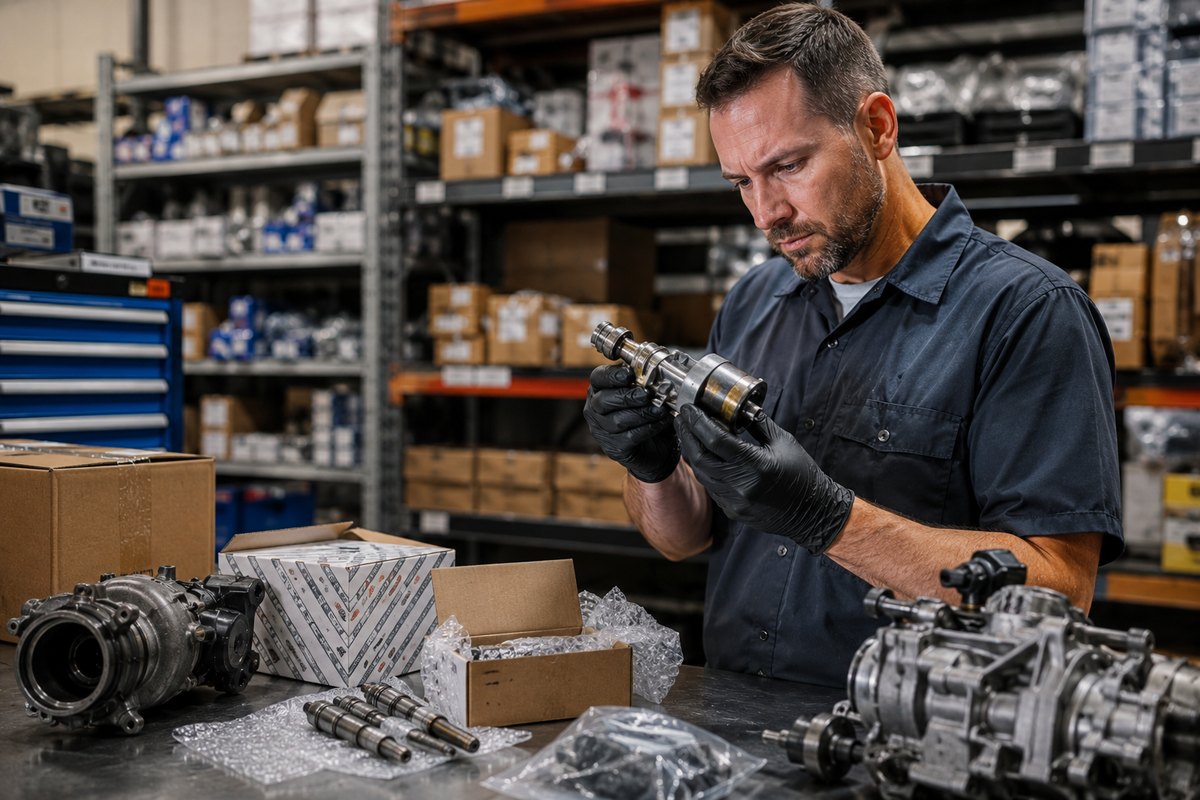


Automotive manufacturing leaves no room for error. Engine housings, transmission shafts, brake calipers, and suspension brackets must perform reliably across thousands of cycles, extreme temperatures, and punishing road conditions. For suppliers offering precision CNC machining services, quality control is not a box to check. It is the foundation every part is built on.
Modern vehicles contain up to 30,000 components, and a significant portion require the tight tolerances that only automotive CNC machining can consistently deliver. When a CNC-machined part deviates from specification, the consequences move fast, rippling through supply chains, dealerships, and onto the road. A major automaker may produce tens of thousands of vehicles daily, meaning a single process drift in the machining workflow can contaminate an entire production run before anyone catches it.
In This Article:
What’s at Stake When CNC-Machined Parts Fail
Structural components such as control arms, wheel bearings, and tie rods are among the most safety-critical parts in any vehicle. A hairline crack or dimensional deviation introduced during CNC machining may pass visual inspection but fail under repeated stress cycles. Metal fatigue turns small machining flaws into complete structural failures, which is exactly why dimensional verification must happen during production, not just at the end of a run.
Electronic housings and sensor brackets carry a different category of risk. Modern vehicles rely on ABS modules, engine controllers, and driver-assistance systems that process data in milliseconds. A micro-void in a CNC-machined housing or bracket can cause intermittent failures under thermal expansion, producing unpredictable behavior in systems where predictability is everything.
The liability exposure that comes with a safety-critical failure in a CNC-machined component makes rigorous quality control a direct financial imperative, not just an engineering preference. Defects that survive the machining process and enter production become field problems — and field problems in automotive are expensive by any measure.
Traceability is equally non-negotiable. Every part supplied to an automotive program must be linked to its production batch, tooling history, and raw material lot. When something goes wrong, traceability enables a targeted, surgical response rather than a blanket recall across an entire model line.
Precision Machining as a Quality Foundation
High-precision CNC machining produces parts to tolerances often tighter than the width of a human hair. Achieving that consistently, across high-volume production runs or tight-deadline prototypes, requires more than capable equipment. It requires a controlled, documented process at every stage of the machining cycle.
In-process measurement is the standard that separates reliable suppliers from the rest. Verifying dimensions mid-production catches drift early, reduces scrap, and prevents out-of-spec parts from advancing further down the line. Waiting until a run is complete to inspect quality is too late and too costly for any serious automotive program.
Custom CNC machining services are especially critical during the development phase. Engineers need prototype parts that validate designs before committing to full production tooling. The ability to machine short-run parts in metal or engineered plastics — with the same dimensional discipline applied to full production volumes — compresses development cycles and surfaces design issues before they become expensive downstream problems.
High-volume production and small-batch precision work both demand the same measurement standards. Suppliers serving automotive programs are typically expected to hold IATF 16949 certification, which mandates documented control plans, statistical process data, and full material traceability at every production tier. These are not optional credentials. They are proof that a supplier’s machining process is capable, repeatable, and auditable.
Precision Is the Guarantee That Gets Vehicles Home Safely
Quality control in automotive CNC machining is the process by which engineering intent is carried from the design file to the finished part. As vehicles grow more complex and safety systems become more interconnected, the standards applied to every machine component will only become more demanding. The discipline built into the machining process — from dimensional controls and in-process inspection to traceability and supplier certification — remains the most reliable guarantee that what is engineered actually performs when it matters most.